
Whether positive or negative, a self-test result is a starting point for a conversation about your symptoms with your doctor. Self-testing provides a preliminary screen of physiological biomarker levels, but is not a diagnosis. Always speak with your doctor if you are concerned about your symptoms or anxious about your health.




SELFCheck
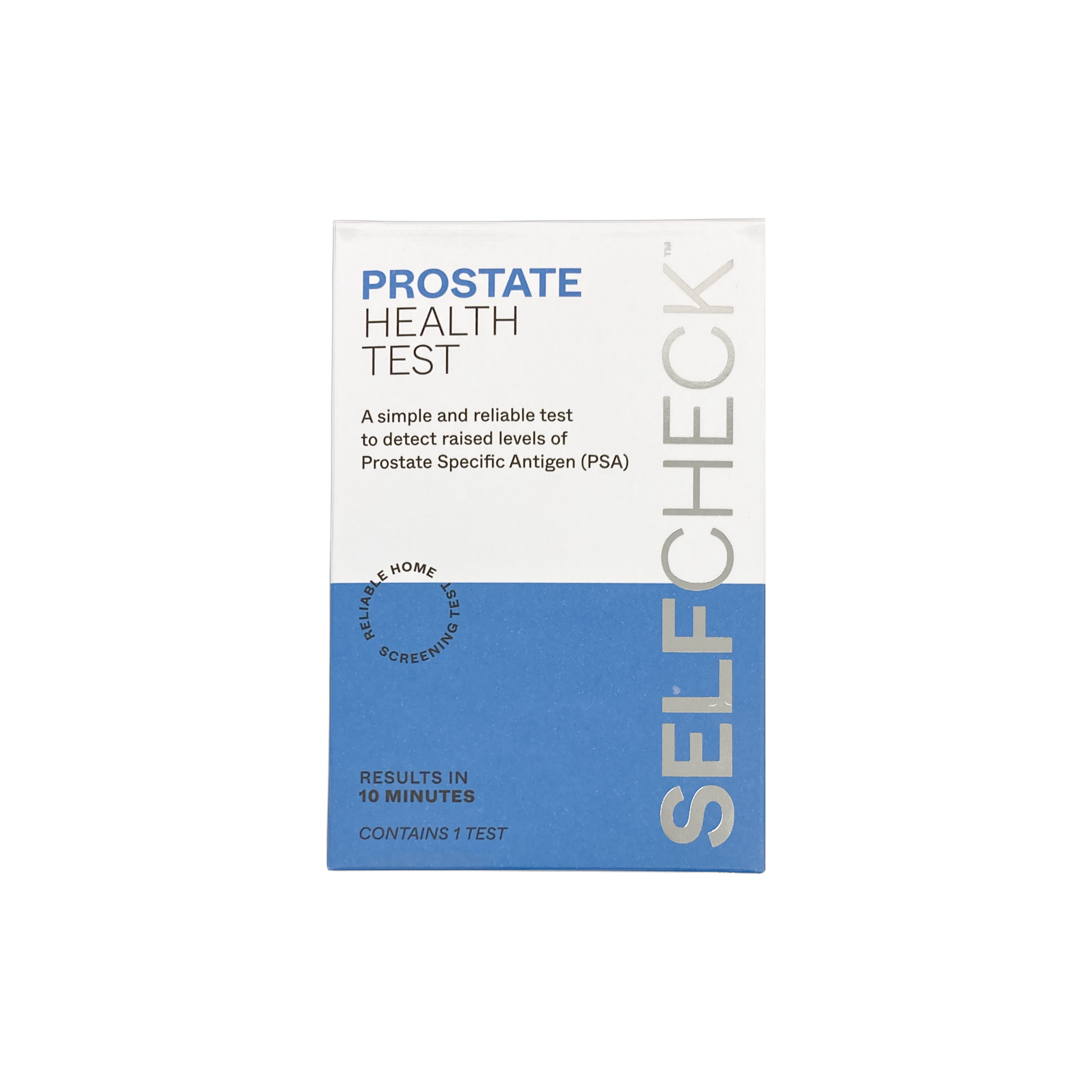
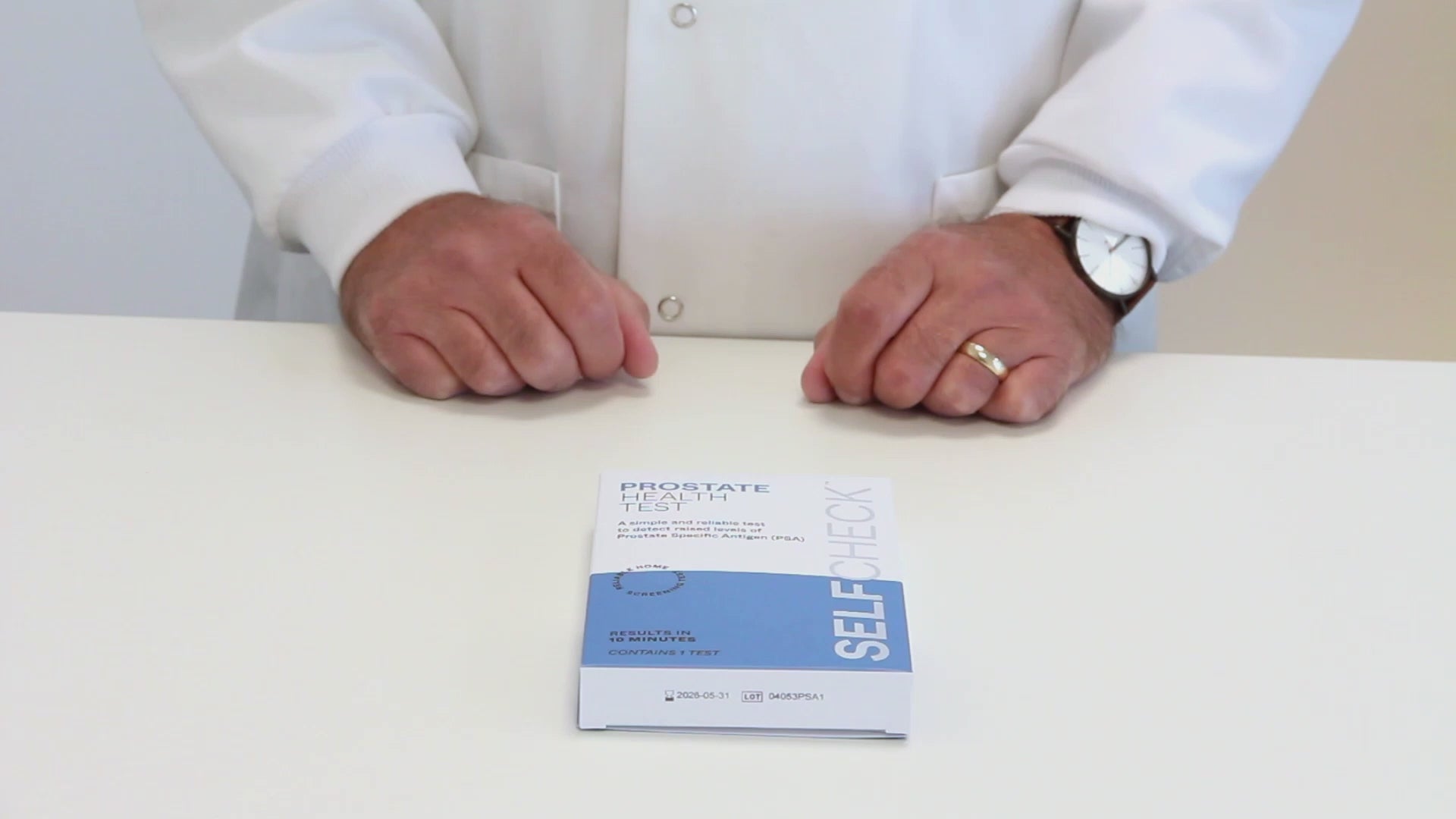
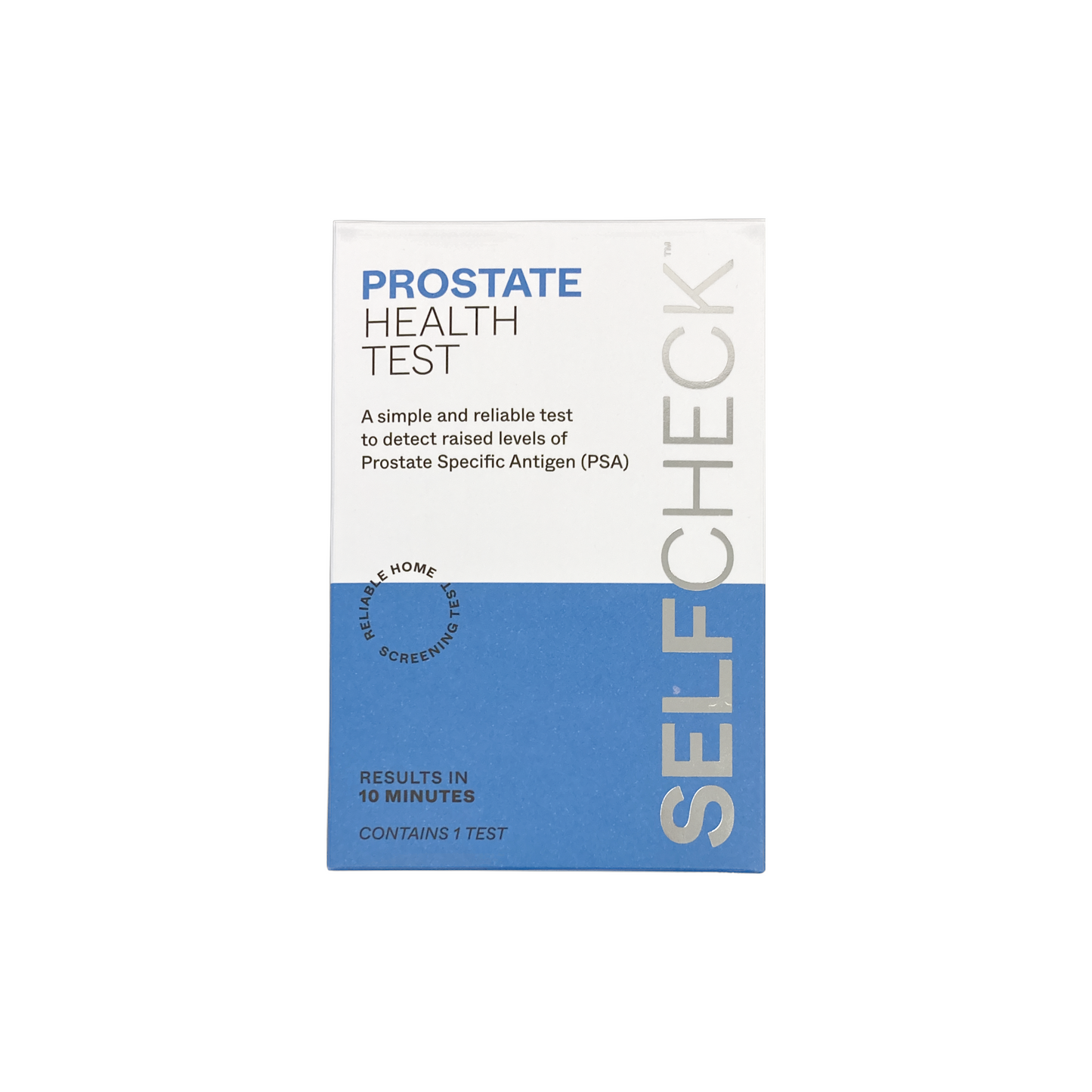
Prostate Health Test (PSA)
Prostate Health Test (PSA)
Buy 1 Get 1 half price
Buy 1 Get 1 half price
Order 2 tests and get the lower priced test for 1/2 price
UK delivery £3.95 (FREE for orders over £30)
UK delivery £3.95 (FREE for orders over £30)
Order before 2pm Monday to Friday for same day dispatch (except holidays). All orders dispatched with Royal Mail 24*
Plain packaging
Plain packaging
Discreet plain packaging on all orders.
Couldn't load pickup availability
Intended use
The SELFCHECK Prostate Health Test is registered with MHRA as a CE certified, in-vitro diagnostic medical device for self-testing.
- Finger-prick blood test
- Safe and easy to use
- Results at home in minutes
- CE certified for self-test use
Contains 1 test.
The test is a manual, qualitative, immunochromatographic (lateral flow), screening self-test for the immunological detection of prostate specific antigen (PSA) in a finger prick whole blood sample.
In the UK, men over 50, those with a family history of prostate cancer, or are of black ethnic origin can ask their NHS GP for a PSA test, even if they do not have symptoms.
General information
PSA is produced by the prostate gland, which is situated in the abdomen under the bladder, and plays an important role in the production of semen. There are many reasons other than prostate cancer that can cause elevated levels of PSA in the blood.
Time to result
The test gives a result in 10 minutes at home.
Warnings
A screening test for a single biomarker, such as prostate specific antigen (PSA), is not a diagnosis.
Not following the instructions exactly as written in the instructions for use may cause a false positive or false negative result.
Do not change your medication, diet or lifestyle solely on the basis of a self-test - always discuss your result with an appropriate healthcare professional first.
A screening test for PSA by itself will not rule in, or rule out prostate cancer, or any other specific prostate disorder. The level of PSA in the blood is a general marker of prostate physiological status, and can be raised for many reasons other than prostate cancer. Conversely, only some people with prostate cancer will have higher than normal PSA levels.
A positive PSA result can cause anxiety and lead to further tests which may show no serious problem, and a negative test result could give a false sense of security.
Consider the potential emotional impact of your result before deciding to test. Whether you have a positive or negative PSA result, always speak with your doctor if you have symptoms or are at an increased risk of prostate cancer.
This test is not intended for monitoring PSA levels in patients who have been diagnosed with prostate cancer.
Accuracy
The SELFCHECK PSA test has a cut-off of 4 ng/mL of PSA calibrated against the WHO 17/100 international standard, and an overall agreement of 97% (91.06-99.61)*, sensitivity of 98.28%, and specificity of 95.24% with laboratory tests for PSA. Although this test is reliable for the detection of PSA, all medical tests can give false positive or false negative results.
IMPORTANT: These figures refer to the agreement of the SELFCHECK test with laboratory PSA tests, and not to the accuracy of tests for the diagnosis of prostate cancer.
*95% confidence interval.
Further information
UK Government Guidance on PSA testing
Information for health care professionals
Principle, performance data, and regulatory information on the SELFCHECK Prostate Health Test for health care professionals.
Revision 14th April 2026.
What SELFCHECK users say
What SELFCHECK users say
We invited SELFCHECK customers to tell us about their experience with their SELFCHECK test.
- 4/5 overall rating
- 9/10 easy to read instructions
- 4/5 thought that using the test was worthwhile
"All appeared good and instructions easy to follow"
"Everything was easy to follow"
"Very satisfied with your service"
"Simple enough, just had to check the instructions a couple of times"
The survey was completed in the Summer of 2024 of 118 random respondents who purchased one of our SELFCHECK tests. All customers are provided with contact information for our customer care team with their test, if they need any help to use their SELFCHECK test, or help to interpret their results.
For further information on how the scores were calculated please contact SELFCHECK.
Information for doctors
Information for doctors
SELFCHECK has been a leading British brand of health checks for over 15 years.
At SELFCHECK, we're working hard to make self-testing better for your patients. All our medical tests are assembled at a quality assured (ISO13485) medical device facility in France, and registered with MHRA according to UK medical device regulations IVDD/IVDR.
We are working closely with the NHS and academia to develop new diagnostics at our own UK R&D labs, particularly in the areas of sepsis, and the monitoring of chronic diseases.
Our professional customer care team provide help for your patients, so they can fully understand how our tests work, and how they should be used.


Important to know
All SELFCHECK medical tests are CE certified according to UK and EU regulations, and registered with MHRA as self-testing devices.
Our tests are based on the same principles used by hospital labs, and provide reliable, meaningful results, but self-testing is not meant to replace established NHS healthcare pathways. Always consider what a positive or negative result will mean to you before testing, and be aware of the limitations of the test you are using.
If you have symptoms that concern you, or are anxious about your health, always speak with your pharmacist or doctor.